Two Encounters with Stephen Harper

This week, Ottawa is marking the 20th anniversary of the modern Conservative Party of Canada’s first electoral victory in 2006. As part of these commemorations, the official portrait of former Prime Minister Stephen Harper will be unveiled. Former members of the Harper government, numbering in the hundreds if not thousands, will gather for a gala dinner to celebrate this milestone.
I am proud to count myself among those who served in that administration. With that in mind, I wish to share two personal anecdotes publicly for the first time.
There is an old English idiom from the post-World War II era: that someone “had a good war,” meaning he performed well and emerged with honour. At the risk of appearing immodest, I can say that I had a “good” tenure in Stephen Harper’s Prime Minister’s Office (PMO). In 2009, I was appointed to lead what was then known as the Strategic Communications department. Unlike the more visible Communications Department, which handled daily media relations and issues management, my role focused on long-term, government-wide strategic planning. My responsibility was to ensure a coherent narrative was applied across every department, region, and channel to achieve maximum reach and impact. I performed this function effectively.
However, as the saying goes, “man plans, God laughs.” In January 2010, the government faced intense criticism over the Prime Minister’s decision to prorogue Parliament during the Christmas break. While the issue held little interest for most Canadians, it dominated elite media commentary for weeks. There were protests outside constituency offices. Conservative MPs in marginal ridings grew increasingly concerned.
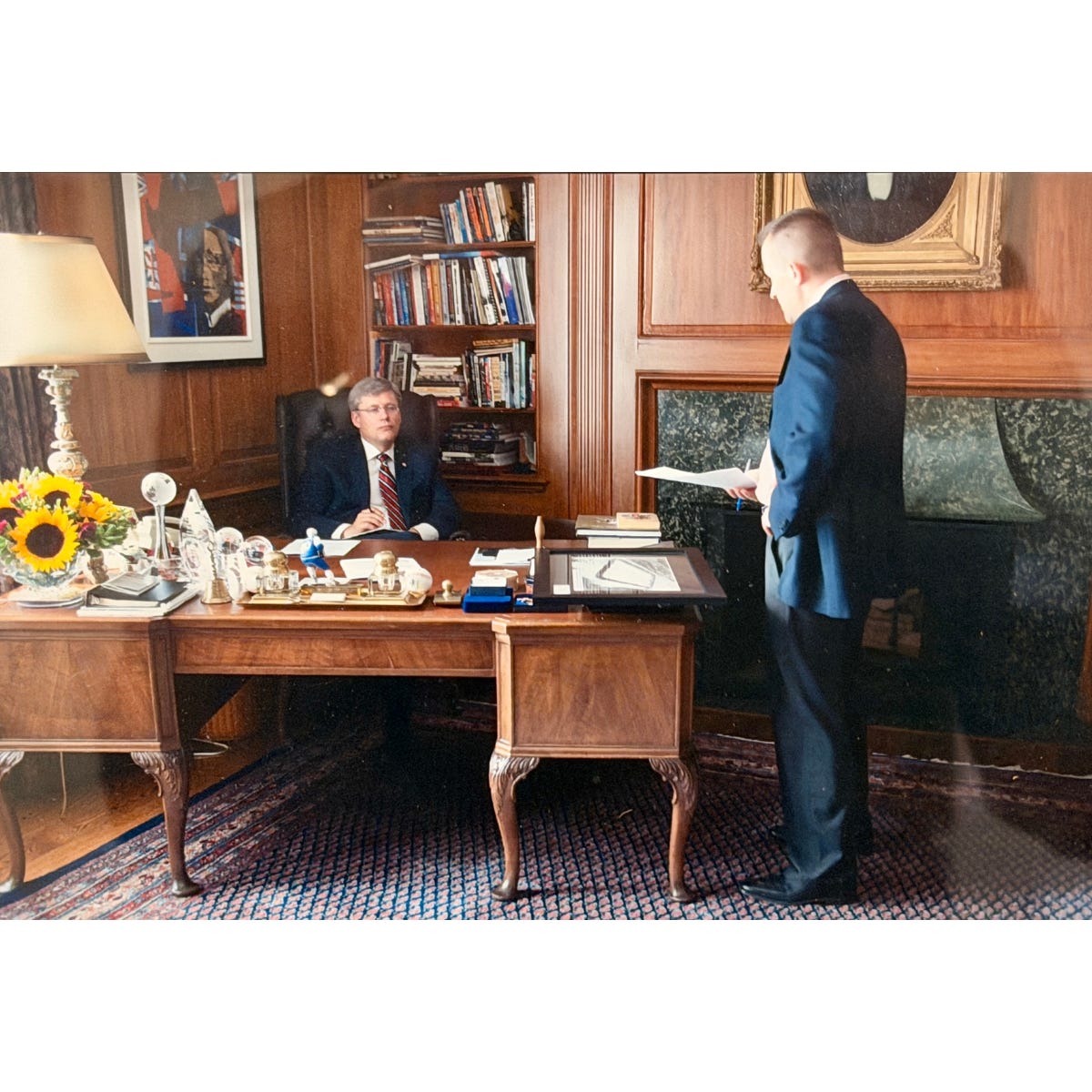
Responsibility for managing the fallout fell, in part, to my department and, ultimately, to me.
Being summoned to the Prime Minister’s office is rarely cause for celebration. I anticipated a difficult conversation, but Stephen Harper’s rebuke remains, to this day, the most severe dressing-down I have ever received! As I returned to my office to lie down and recover, a more seasoned colleague offered perspective: I had just undergone an initiation ritual. He described it, quite rightly, as an honour and privilege to receive such direct attention from the Prime Minister of Canada.
I soon came to appreciate the truth of his words. Being the subject of the Prime Minister’s scrutiny was, in fact, a badge of honour; a sign that one mattered enough to warrant his focus. Far worse was to be overlooked entirely.
In the lead-up to the 2011 federal election, I was entrusted with the Conservative campaign’s advertising. If my regular role had been demanding, this was exponentially more so: my work would reach millions and face intense public and media scrutiny. Inevitably, an error occurred.
I approved an advertisement that took a statement by Liberal Leader Michael Ignatieff out of context. Although it appeared only on YouTube, not on television, it sparked significant media controversy. The ad was promptly removed, and an apologetic statement was issued. The responsibility was mine, and I felt profound regret for having let the team down.
That evening, while walking my dog, my phone rang: “Please hold for the Prime Minister.”
I did not expect to be fired. The Prime Minister would not personally handle such a matter. But I braced for another stern reprimand.
What followed was brief and unexpected. The substance escapes precise recollection, but the message was effectively: “Don’t worry about it. Keep up the good work.” Relief and gratitude followed immediately.
The Conservative majority secured in 2011 laid the foundation for much of my subsequent professional success.
These two anecdotes, though contrasting, reveal complementary aspects of Stephen Harper’s leadership: the insistence on rigorous accountability when standards must be upheld, and the wisdom to offer support and perspective when it is most needed. He brought out the best in me.
I hope that Stephen Harper will reflect on this anniversary period with a well-earned sense of satisfaction
.